Hot Work Permit Requirements: A 2026 Safety Guide
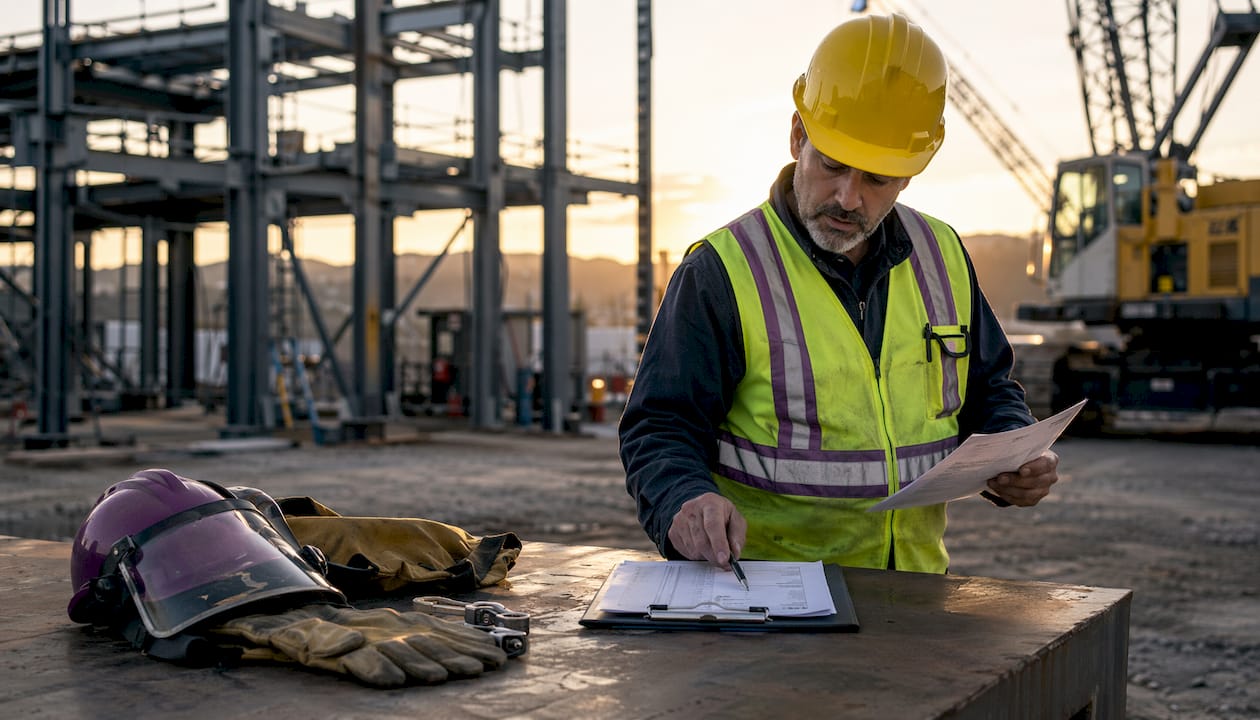
A hot work permit is a formal written authorization required for any operation that generates heat, sparks, or open flames outside a permanently designated fire-safe area. Governed by NFPA 51B and OSHA 29 CFR 1910.252, the permit system forces a structured safety review before work begins, during operations, and after completion. For construction and safety personnel, understanding what a hot work permit covers and how to obtain one is the difference between a compliant job site and a preventable fire.
What is a hot work permit and what activities require one?
A hot work permit is required for any task that produces an ignition source in an area not specifically built and cleared for that purpose. The standard industry term is “hot work permit,” though you may also see it called a “hot works permit” or a permit to work for fire-risk operations. Both terms refer to the same formal authorization system.
Written permits are required for operations including arc welding, gas cutting, plasma cutting, grinding, brazing, soldering, and torch-applied roofing. The key criterion is simple: if the task generates heat, sparks, or an open flame, it needs a permit unless the work occurs in a permanently designated and controlled area cleared of all combustibles.
Common activities that require a hot work permit:
- Arc welding and gas welding: Any fusion of metals using electrical arcs or gas flames
- Cutting operations: Oxy-fuel cutting, plasma cutting, and abrasive cutting discs
- Grinding: Angle grinders and bench grinders both produce sparks capable of igniting flammables
- Brazing and soldering: Lower-temperature processes that still generate open flames
- Torch-applied roofing: A frequently overlooked activity that has caused numerous structure fires
- Heat guns and open-flame thawing: Any device using a sustained flame near combustible materials
A permit is not required when work occurs in a permanently designated hot work area that is specifically designed, cleared of combustibles, and approved by the authority having jurisdiction. Outside that controlled space, the permit requirement applies without exception.
Pro Tip: Grinding is the most commonly skipped permit trigger on construction sites. Workers often treat it as a minor task, but a single spark from an angle grinder can travel up to 35 feet and ignite hidden combustibles. Always treat grinding as a full hot work operation.
How do you obtain and issue a hot work permit?
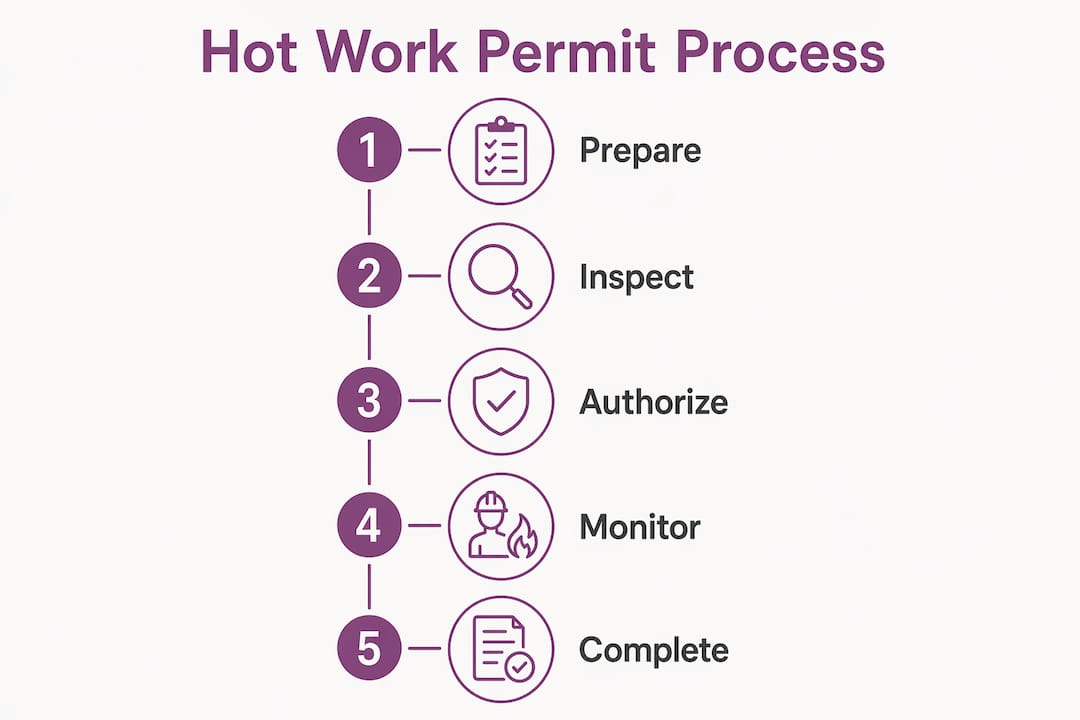
The permit process follows a defined sequence of steps, each with a specific responsible party. Skipping any step voids the protection the system provides.
-
Identify the Permit Authorizing Individual (PAI). The PAI is the qualified person responsible for inspecting the work area, approving the permit, and verifying that all safety conditions are met before work starts. This role cannot be delegated to the worker performing the hot work.
-
Conduct a pre-work hazard assessment. The PAI walks the work area and identifies all combustible materials, flammable liquids, gases, and structural vulnerabilities. This includes checking for combustibles behind walls, above ceilings, and below floors.
-
Clear or shield the 35-foot radius. Combustible materials must be removed or shielded within a 35-foot radius of the hot work location. Wall and floor openings through which sparks could travel must be sealed before work begins.
-
Perform atmospheric testing in high-hazard areas. In facilities handling flammable gases or vapors, atmospheric testing below 10% LEL (Lower Explosive Limit) is mandatory. A qualified person using a calibrated gas detector must conduct this test immediately before work starts.
-
Complete and post the permit form. The permit form serves as both a checklist and a legal record. It must be filled out completely, signed by the PAI, and posted visibly at the job site for the duration of the work.
-
Assign the fire watch. A dedicated fire watch must be in place before work begins. The fire watch is not the worker performing the hot work.
-
Set the permit duration. Permits are typically valid for one shift or one working day. The PAI sets the specific start and end time on the form.
| Permit element | Requirement |
|---|---|
| Issuing authority | Permit Authorizing Individual (PAI) |
| Combustible clearance radius | 35 feet minimum |
| Atmospheric testing threshold | Below 10% LEL in high-hazard areas |
| Permit posting | Visible at the work location |
| Typical permit duration | One shift or one working day |
| Re-validation trigger | Any pause, alarm, or change in site conditions |
Permits must be suspended and re-validated if a fire alarm sounds, new combustibles are introduced, or work pauses for any significant period. The PAI must re-inspect the area before work resumes. This step is one of the most frequently skipped in practice, and it is also one of the most consequential.
Pro Tip: Use the permit form as a live document, not a one-time checkbox. If conditions change mid-shift, the PAI must physically return to the site, re-inspect, and re-sign. A permit signed at 7:00 AM does not automatically cover conditions at 2:00 PM.
For a ready-to-use reference, the hot works permit template guide from Certicerts walks safety managers through every field on a compliant permit form.
What are the fire watch responsibilities during hot work operations?
The fire watch is the most underestimated role in the hot work permit system. Many sites treat it as a secondary duty assigned to whoever is available. That approach is wrong and creates serious liability.
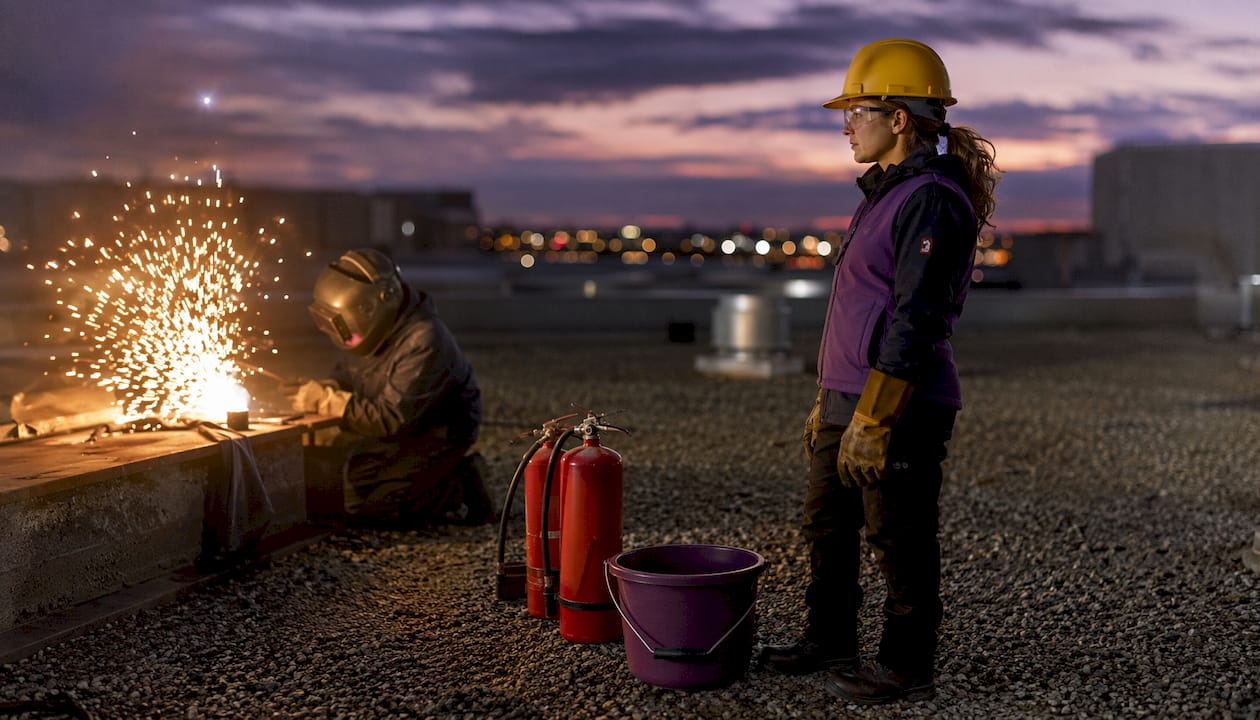
Fire watch personnel must be dedicated solely to monitoring the hot work area. They cannot perform any other task while the hot work is in progress. Their only job is to watch for fire, smoke, or developing hazards and respond immediately.
Core fire watch duties include:
- Maintaining a clear line of sight to the entire hot work area at all times
- Carrying fire suppression equipment appropriate to the hazard, typically a charged fire extinguisher rated for the materials present
- Monitoring adjacent areas including spaces above, below, and behind walls where sparks may have traveled
- Exercising the authority to stop work immediately if a hazard develops, without needing approval from the worker or supervisor
- Continuing to monitor the area for a minimum of 30 minutes after hot work ends, since smoldering fires can ignite long after the flame is gone
- Signing off on the permit only after the post-work monitoring period is complete and the area is confirmed clear
Fire watch personnel must be fully empowered to halt operations when hazards appear. This requires a genuine cultural commitment from site leadership. A fire watch who fears pushback from workers or supervisors will hesitate at exactly the wrong moment.
How does a hot work permit fit within broader safety programs?
A hot work permit does not operate in isolation. It is one component of a Permit to Work (PTW) system that coordinates multiple concurrent hazard controls on a job site. When hot work occurs inside a confined space, for example, both permits must be active simultaneously and their requirements must be reconciled before work begins. Lockout/tagout procedures may also apply when hot work is performed near energized equipment.
Record-keeping is where many organizations fall short. Completed permits serve as legal records that demonstrate duty of care during OSHA inspections and insurance audits. A missing or incomplete permit record is treated as evidence of a failed safety program, not just a paperwork gap.
| Approach | Paper permits | Digital permit systems |
|---|---|---|
| Record storage | Physical files, risk of loss | Centralized, searchable, audit-ready |
| Real-time monitoring | Not possible | Live status visible to supervisors |
| Re-validation tracking | Manual, easy to miss | Automated alerts on condition changes |
| Compliance reporting | Labor-intensive | Generated on demand |
Digital hot work permit systems reduce administrative friction and improve real-time monitoring compared to paper-based processes. The shift to digital also eliminates the risk of misplaced documentation, which is a common audit failure point. Safety personnel managing multiple concurrent permits across a large site benefit most from this transition.
Common pitfalls in hot work permit programs include failing to re-validate after work pauses, underestimating the ignition potential of grinding operations, and treating the permit as a formality rather than a genuine hazard control. The permit’s real value is the structured decision-making it enforces, not the paper it produces.
For safety professionals evaluating digital tools, the job hazard analysis software guide from Certicerts covers how digital systems improve compliance tracking across permit types.
Key Takeaways
A hot work permit is a mandatory written authorization governed by NFPA 51B and OSHA 29 CFR 1910.252, requiring site preparation, atmospheric testing, fire watch assignment, and documented re-validation whenever conditions change.
| Point | Details |
|---|---|
| Permit scope | Any heat, spark, or flame operation outside a designated fire-safe area requires a written permit. |
| 35-foot clearance rule | Combustibles must be removed or shielded within 35 feet of the hot work location before the PAI signs off. |
| Fire watch is a dedicated role | The fire watch cannot perform any other task and must monitor the area for at least 30 minutes after work ends. |
| Re-validation is mandatory | Permits must be suspended and re-inspected by the PAI after any pause, alarm, or change in site conditions. |
| Records protect the organization | Completed permits serve as legal evidence of duty of care during OSHA inspections and insurance audits. |
The permit is a decision tool, not a document
I have reviewed hot work permit programs on sites ranging from small renovation projects to large industrial facilities. The single biggest gap I see is not missing paperwork. It is the belief that signing the permit at the start of the shift is enough.
The permit system works because it forces a structured “stop and think” moment before anyone lights a torch or picks up a grinder. That moment is where hidden hazards get caught. A combustible ceiling tile above a welding point. A solvent-soaked rag left by a previous crew. A floor penetration that nobody sealed. The checklist catches what a quick visual scan misses.
Re-validation is where programs consistently break down. Workers take a lunch break, conditions shift, and work resumes without anyone re-inspecting. I have seen this pattern on sites with otherwise strong safety cultures. The fix is structural: the PAI must physically return to the site after any meaningful pause. That requirement needs to be non-negotiable, not aspirational.
The fire watch culture issue is equally real. Empowering someone to stop a senior welder mid-task requires genuine organizational backing. Sites that treat the fire watch as a junior observer rather than an authority figure are one smoldering spark away from a serious incident.
Transitioning to a digital permit system addresses the re-validation and record-keeping gaps more reliably than any paper-based process. Automated alerts when a permit approaches expiration or when conditions change remove the human memory factor from a step that cannot afford to be forgotten.
— James
Certicerts supports your hot work safety program
Hot work safety depends on trained personnel and documented compliance records. Certicerts helps construction and safety organizations issue professional training certificates and wallet cards that demonstrate verified hot work safety proficiency for every worker on site.

With QR-verified certificates, compliance dashboards, and batch issuing for large training events, Certicerts gives safety managers a complete record of who is trained, when certifications expire, and what gaps need to be addressed before the next permit is issued. Every certificate includes offline-capable QR verification so auditors and clients can confirm credentials instantly. If your organization is ready to replace paper training records with a system built for compliance, Certicerts is the place to start.
FAQ
What is a hot work permit used for?
A hot work permit is a written authorization that verifies all safety controls are in place before any operation generating heat, sparks, or open flames begins outside a designated fire-safe area. It serves as both a safety checklist and a legal compliance record.
Who can issue a hot work permit?
The Permit Authorizing Individual (PAI) issues hot work permits after physically inspecting the work area, confirming combustible clearance within 35 feet, and verifying that all permit conditions are met.
How long is a hot work permit valid?
A hot work permit is typically valid for one shift or one working day. It must be suspended and re-validated by the PAI if work pauses, site conditions change, or a fire alarm activates.
Does grinding require a hot work permit?
Grinding requires a hot work permit because angle grinders and similar tools produce sparks capable of traveling up to 35 feet and igniting combustible materials. It is one of the most commonly overlooked hot work activities on construction sites.
What happens if a hot work permit is not used?
Operating without a required hot work permit violates OSHA 29 CFR 1910.252 and NFPA 51B, exposing the organization to regulatory fines, insurance liability, and legal accountability in the event of a fire or injury.