Hot Work Permit Template: Safety Manager’s 2026 Guide

A hot work permit template is a standardized authorization form that documents safety controls for any operation producing sparks, open flames, or heat capable of igniting combustibles outside designated fire-safe areas. Under NFPA 51B and OSHA 1910.252, these permits are mandatory for welding, cutting, brazing, grinding, and similar ignition-source activities in non-designated locations. A well-designed hot work authorization form does more than satisfy a regulatory checkbox. It forces a structured pre-work hazard assessment, assigns clear responsibilities, and creates an auditable record that protects your organization during inspections and insurance claims.
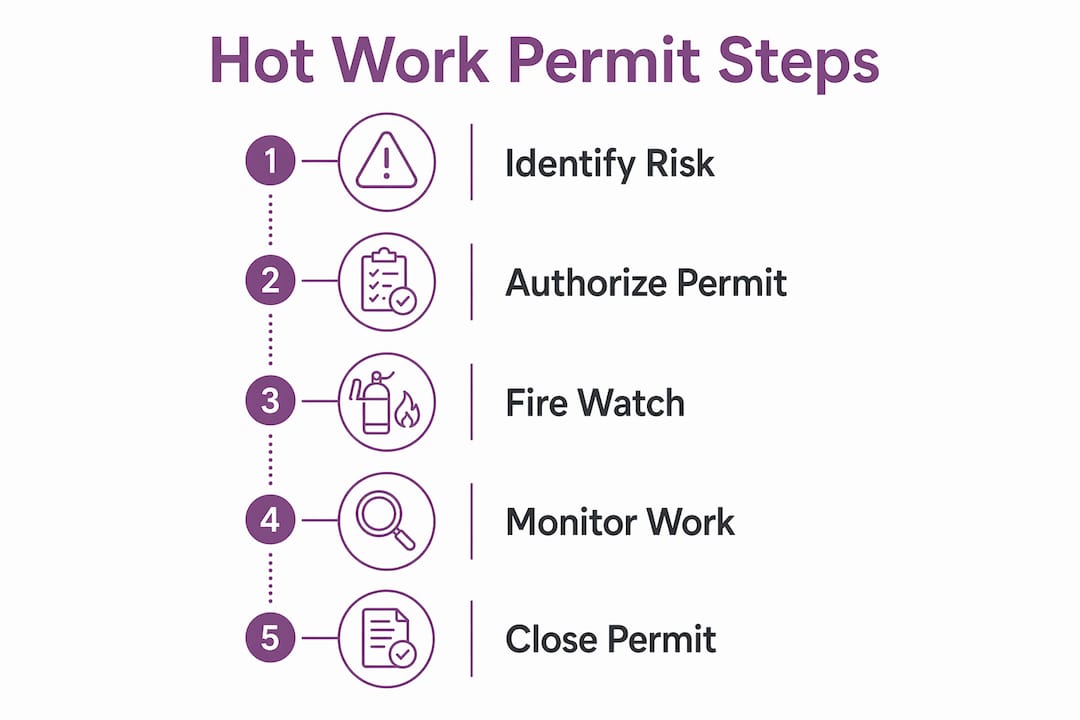
What must a hot work permit template include?
A complete hot work permit template contains specific fields that serve both operational and legal purposes. Missing even one critical element can void the permit’s compliance value and expose your organization to liability.
Every permit must capture the following:
- Permit number and issue date. Each permit needs a unique identifier for tracking and record retention.
- Validity period. Permits are limited to a single shift, typically 8–12 hours maximum. A permit cannot carry over to the next shift without re-authorization.
- Work location and type of hot work. Specify the exact location, building, floor, and the nature of the operation (welding, torch cutting, grinding, and so on).
- Pre-work safety checklist. This section documents compliance with NFPA 51B Chapter 5 criteria before any work begins.
- Fire watch identification. Name the designated fire watch, confirm their training status, and list the equipment they carry.
- Signatures and authorizations. The Permit Authorizing Individual (PAI), the operator, and the fire watch must all sign before work starts.
- Permit posting confirmation. The form must note where the permit is physically posted at the work site.
- Close-out sign-off. A final signature confirms the area is clear, cool, and free of embers after work ends.
The table below shows how each permit field maps to its compliance purpose.
| Permit field | Compliance purpose |
|---|---|
| Permit number and validity | Enables audit trail and prevents multi-shift misuse |
| Work location and type | Confirms scope and prevents scope creep during work |
| Pre-work safety checklist | Documents NFPA 51B Chapter 5 site conditions |
| Fire watch identification | Assigns legal responsibility for post-work monitoring |
| PAI and operator signatures | Establishes authorization chain for OSHA compliance |
| Close-out sign-off | Confirms safe area status for insurance and audit defense |
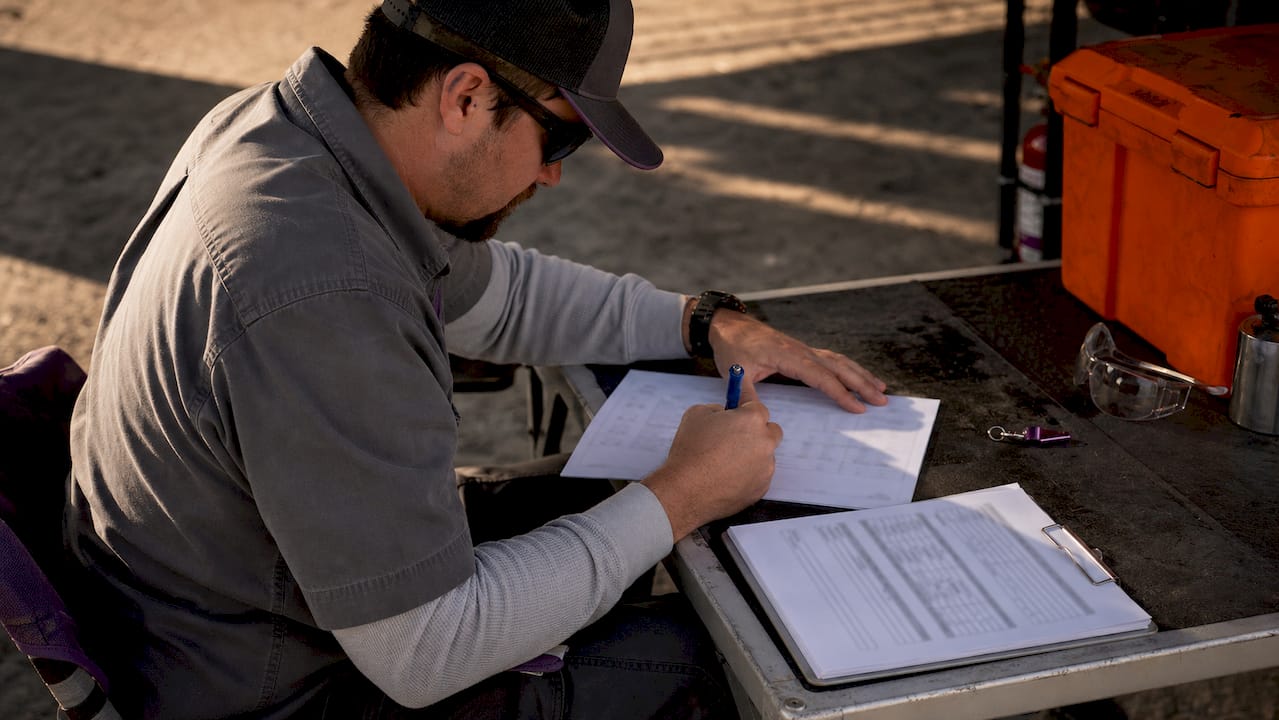
Pro Tip: Print permits on colored paper that changes by day of the week. Workers and supervisors can spot an expired permit from across the room without reading the date.
NFPA 51B and major insurers require retaining canceled permits for at least 12 months. That retention window covers most insurance claim investigation periods and regulatory audit cycles.
How do you conduct a pre-work hazard assessment for hot work?
The pre-work hazard assessment is the most consequential step in the entire hot work procedure. Skipping or rushing it is the single most common cause of hot work fires.
The Permit Authorizing Individual must physically inspect the site and confirm all of the following before signing the permit:
- Establish the 35-foot clearance zone. All combustibles within 35 feet of the hot work location must be removed or shielded. This includes materials stored in adjacent concealed spaces, floor openings, and on the opposite side of metal partitions.
- Check concealed spaces. Concealed combustibles and hidden spark travel paths are the most frequently overlooked fire risks found during compliance audits. Inspect wall cavities, ceiling voids, and pipe chases.
- Conduct atmospheric testing. In confined spaces or areas with potential flammable vapor accumulation, atmospheric testing is required before and during work. Document the test results on the permit form.
- Confirm fire protection system status. Verify that sprinkler systems, smoke detectors, and fire alarms are operational. If any system must be temporarily isolated to prevent false activation, document the isolation and assign responsibility for re-enabling it immediately after work ends.
- Verify fire suppression equipment. Confirm that appropriate fire extinguishers, fire blankets, and water sources are positioned at the work site before the permit is issued.
- Validate the PAI’s authority. The PAI must inspect and confirm seven NFPA 51B Chapter 5 conditions before signing. This is not a delegable task. The PAI carries personal accountability for the site conditions at the time of authorization.
- Document all findings. Record every condition, including items that required corrective action before approval. This documentation protects the organization if a fire occurs and demonstrates due diligence.
For complex sites, a job hazard analysis completed before the permit assessment gives the PAI a structured baseline for identifying non-obvious risks. Combining a JHA with the permit checklist catches hazards that a permit form alone may not surface.
- Isolate ignition sources in adjacent areas where possible.
- Wet down combustible floors and surfaces that cannot be removed.
- Confirm that all personnel in the area know hot work is in progress.
What are the fire watch duties and permit close-out steps?
The fire watch role is the most misunderstood and most frequently compromised element of hot work safety. Fire watch must have no other duties during or after hot work. Assigning fire watch responsibilities to a worker who is also assisting with welding or material handling directly undermines the entire permit system.
A properly assigned fire watch must:
- Carry a charged fire extinguisher rated for the hazards present.
- Maintain direct visual contact with the work area and all adjacent spaces where sparks may travel.
- Have immediate access to a fire alarm or communication device.
- Hold the authority to stop work immediately if unsafe conditions appear.
The monitoring period after work ends is where most post-work fires start. Smoldering materials can ignite 30 minutes to several hours after the last spark.
OSHA requires a minimum 30-minute fire watch after hot work ends. NFPA 51B and most insurers require 60 minutes, often structured as continuous monitoring followed by intermittent checks. The 60-minute standard is the defensible choice in any audit or insurance investigation.
Pro Tip: Set a physical timer at the work site when hot work ends. A visible countdown removes any ambiguity about when the fire watch period is complete.
Permit close-out is a formal step, not an informal handshake. Proper close-out requires documented signatures from the fire watch confirming the area is cool and free of embers. The completed permit must record the actual end time, the fire watch duration, and the final inspection result. File the closed permit immediately. Do not leave it at the work site.
What are the most common hot work permit mistakes?
Most hot work incidents trace back to a small set of recurring failures. A well-designed permit template prevents several of them by making the correct action the path of least resistance.
- Permits spanning multiple shifts without re-authorization. A permit is valid for one shift only. Continuing work under yesterday’s permit is a direct OSHA violation and voids any insurance protection tied to permit compliance.
- Fire watch performing other duties. This is the most cited failure in post-incident investigations. The fire watch position requires full attention. Any secondary task compromises response time.
- Incomplete combustible clearance. Safety managers often clear visible materials but miss combustibles in wall cavities, above drop ceilings, or through floor openings. The 35-foot rule applies to all spaces where sparks or heat can travel, not just the visible floor area.
- Failure to re-enable fire detection systems. Smoke detectors and sprinkler systems are sometimes isolated before hot work and never re-enabled. This leaves the facility unprotected long after the permit has closed. The permit form must include a dedicated field requiring confirmation that all systems are restored before close-out sign-off.
- No formal permit display policy. Permits posted in a supervisor’s office rather than at the work site defeat their purpose. Workers and inspectors need to see the active permit at the point of work.
- Inadequate record retention. Discarding permits after work ends eliminates your audit defense. Retain all completed permits for at least 12 months, organized by date and location.
For safety managers building or updating a hot work documentation system, aligning the permit template with your broader safety documentation practices reduces gaps and makes audits faster to complete.
Key Takeaways
A hot work permit template is the primary control document that prevents fires, assigns accountability, and creates the audit record required by NFPA 51B and OSHA 1910.252.
| Point | Details |
|---|---|
| Single-shift validity | Reissue permits for every new shift; never carry over an authorization from the previous day. |
| PAI site inspection | The Permit Authorizing Individual must physically confirm all seven NFPA 51B Chapter 5 conditions before signing. |
| 35-foot clearance rule | Remove or shield all combustibles within 35 feet, including concealed spaces and wall cavities. |
| Fire watch dedication | Assign fire watch as a sole duty; 60 minutes of post-work monitoring is the defensible standard. |
| 12-month record retention | Retain all completed and canceled permits for at least 12 months to support audits and insurance claims. |
The permit is a communication tool, not just paperwork
Safety managers who treat the hot work permit as a bureaucratic hurdle miss its real function. The permit system works because it enforces pre-work hazard analysis and repeated safety checks, not because it generates a signed document.
The most valuable feature of a well-designed permit is the re-validation requirement. Permit conditions must be re-validated if environmental or operational factors change during work. A shift in wind direction, a new delivery of combustible materials nearby, or a change in personnel all require the PAI to stop work and reassess. Many accidents happen when work continues under conditions that have changed since the permit was issued.
I’ve seen organizations with excellent permit templates fail audits because their fire watch was undertrained and their close-out procedures were informal. The template is only as good as the people executing it. Invest in fire watch training with the same seriousness you invest in operator training. A fire watch who does not know how to use an extinguisher or when to pull an alarm is not a fire watch. They are a liability.
Digital permit tracking changes the audit equation significantly. When permits are logged electronically, compliance officers can pull a complete history by location, date, or operator in minutes rather than hours. That speed matters when an insurer or regulator asks for documentation under time pressure. If your organization still manages permits on paper, building a digital tracking layer on top of your existing template is a practical first step.
— James
How Certicerts supports hot work safety compliance
Safety training is only as credible as the documentation behind it. When your fire watch personnel, PAIs, and hot work operators hold verifiable training credentials, your permit system gains an additional layer of defensibility during audits and insurance reviews.

Certicerts gives safety managers a direct way to issue, manage, and verify training certificates and wallet cards for every worker involved in hot work operations. Each certificate includes QR verification, expiry tracking, and a complete training record, so you can confirm at a glance that your fire watch is current on their training before you sign a permit. Certicerts runs as a local-first Windows application, which means your records stay under your control with no dependency on internet connectivity during field operations.
FAQ
What is a hot work permit template?
A hot work permit template is a standardized authorization form that documents safety controls, identifies responsible personnel, and records pre-work and post-work conditions for operations involving sparks, open flames, or heat in non-designated areas. It satisfies requirements under NFPA 51B and OSHA 1910.252.
How long is a hot work permit valid?
A hot work permit is valid for a single shift only, typically 8–12 hours. Work that continues into a new shift requires a new permit with a fresh site inspection and re-authorization by the PAI.
Who can authorize a hot work permit?
The Permit Authorizing Individual (PAI) issues the permit after physically inspecting the site and confirming all NFPA 51B Chapter 5 safety conditions are met. This role cannot be delegated to the operator performing the hot work.
How long must fire watch continue after hot work ends?
OSHA requires a minimum 30-minute fire watch after hot work ends. NFPA 51B and most insurers require 60 minutes. The 60-minute standard is the defensible choice for compliance and insurance purposes.
How long should completed hot work permits be retained?
NFPA 51B and major insurance firms require retaining canceled hot work permits for at least 12 months. Organized retention by date and location supports both regulatory audits and insurance claim investigations.