Hot Work Permit Example: A Safety Professional’s Guide
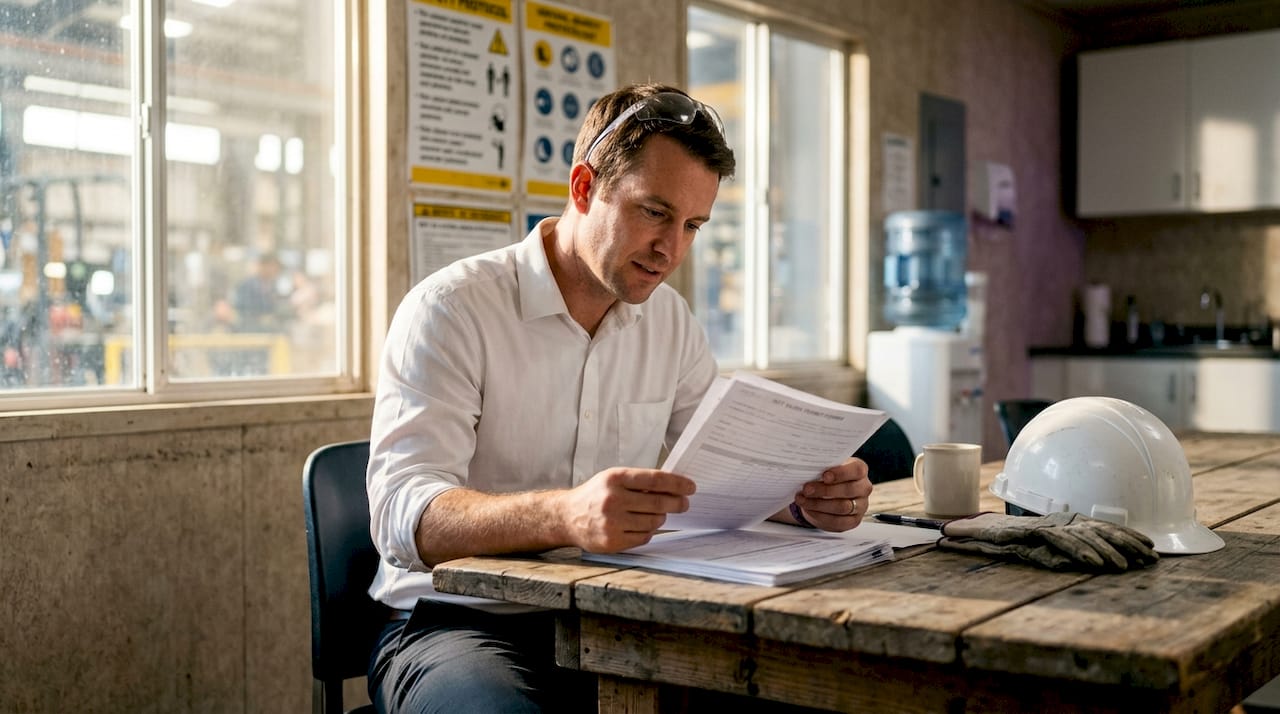
A hot work permit is a formal written authorization required before any work involving open flames, sparks, or heat-producing equipment begins at a facility. Formally called a “permit to work” under OSHA 1910.252 and NFPA 51B, this document is the primary control preventing fires, explosions, and injuries during welding, cutting, grinding, and brazing operations. A well-structured hot work permit example shows safety professionals exactly which fields, checklists, and sign-offs a compliant permit must contain. Getting the format right is not optional. High-risk industries including construction, petrochemical, and maritime facilities all converge on the same core permitting requirements.
What does a complete hot work permit example include?
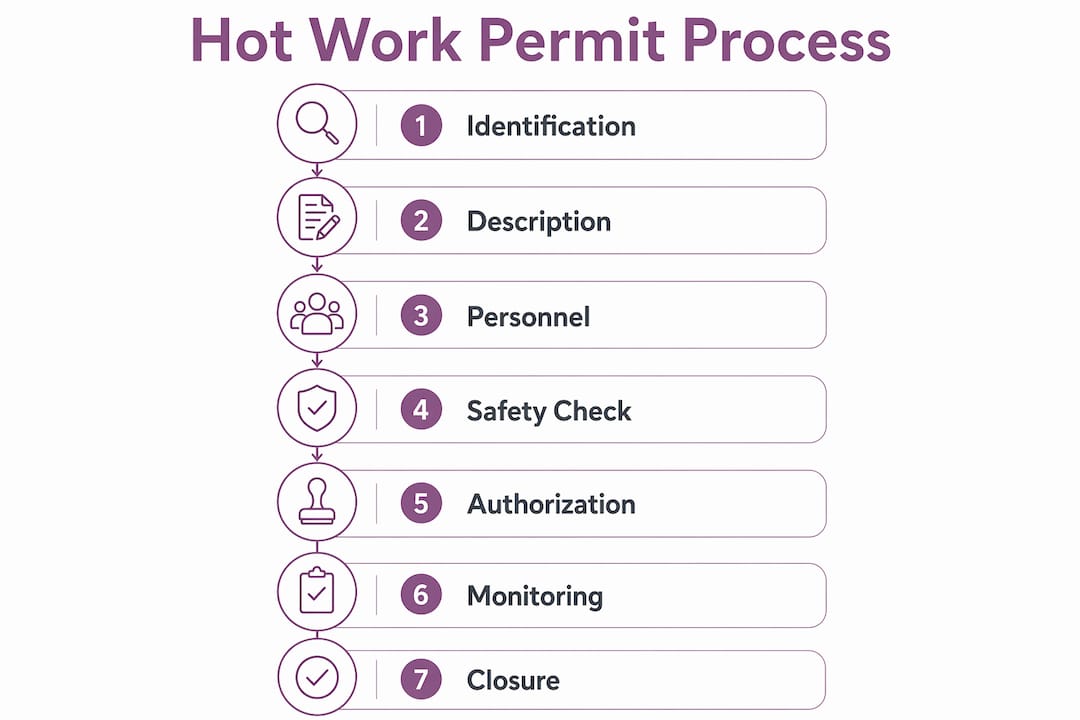
A complete hot work permit covers six core sections: permit identification, work description, location details, personnel assignments, a pre-work safety checklist, and a post-work close-out block.
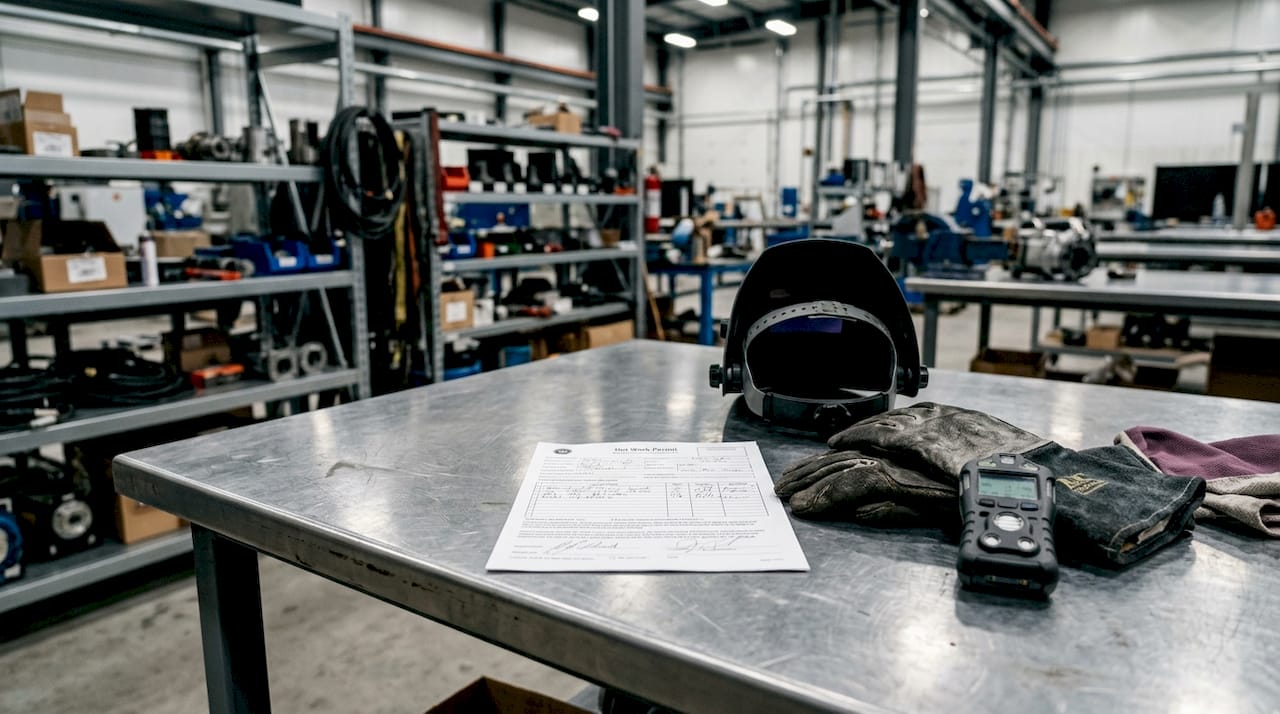
Permit identification and validity
Every permit starts with a unique permit number, the date of issue, and a defined validity window. Permit validity is limited to a single shift, typically 8–12 hours. A permit that spans multiple shifts degrades vigilance and creates accountability gaps between crews.
Work description and location
The permit must name the specific type of hot work: welding, cutting, grinding, torch use, or similar. It must also record the exact work location, including building, floor, room number, and any confined space designation. Vague location entries are one of the most common audit failures.
Personnel fields
Three roles appear on every compliant permit:
- Issuing authority: The supervisor or safety officer who authorizes the work.
- Performing authority: The qualified worker executing the hot work.
- Fire watch: The dedicated person monitoring for ignition during and after the work.
Each role requires a printed name, signature, and contact number. No permit should proceed with any of these fields blank.
Pre-work fire safety checklist
The checklist is the operational core of the permit. Standard items include:
- Combustibles removed or protected within an 11-meter radius of the work area.
- Floor and wall openings covered to block spark travel.
- Sprinkler systems confirmed operational.
- Fire extinguisher confirmed within 3 meters of the work point.
- Atmospheric test result recorded, confirming levels below 10% of the Lower Explosive Limit (LEL).
- Adjacent areas inspected, including the reverse side of walls and floors.
Pro Tip: Print the checklist in a two-column format with a checkbox on the left and a “verified by” initial field on the right. This forces each item to be confirmed by a named person, not just checked off anonymously.
Post-work close-out block
The permit closes with a fire watch log recording the end time of hot work, the start and end time of the post-work monitoring period, and the fire watch’s signature confirming no ignition was detected. This block is the legal record that the permit was properly closed.
What are the critical safety requirements and roles in the hot work permit process?
The permit process fails when roles blur or safety thresholds are treated as suggestions. Three requirements are non-negotiable.
Fire watch duration and duties
OSHA 1910.252 mandates a minimum 30-minute fire watch after hot work ends. Many facilities extend this to 60 minutes to catch smoldering embers that ignite well after the torch goes cold. The fire watch must remain at the work site for the full duration, with no competing duties.
Fire watch is a dedicated role, not a secondary assignment. A fire watch assigned to also answer radios, move materials, or assist other workers cannot maintain the continuous visual monitoring that prevents post-work fires. Fire watch personnel must be trained to use firefighting equipment and activate alarms without hesitation.
Atmospheric testing thresholds
Atmospheric testing must confirm levels below 10% LEL before work starts and at regular intervals during the operation. Testing is performed by a competent person using a calibrated combustible gas detector. A reading at or above 10% LEL requires immediate work stoppage and permit suspension until the atmosphere is cleared and retested.
Defined authority roles
Separating authorization from execution reduces risk by keeping checks independent. The issuing authority must not be the same person performing the work. The area authority, typically the supervisor responsible for the work zone, confirms the location is safe before signing off. This three-role structure prevents the single-person approval failures that appear repeatedly in incident investigations.
Permit validity is also a hard limit. A permit issued for the morning shift cannot be carried over to the afternoon crew. Fresh permits for each shift maintain proper documentation and require a new briefing, which catches hazards that changed between shifts.
How do you execute a hot work permit from issuance to closure?
The permit process follows a defined sequence. Skipping steps is the most common cause of permit-related incidents.
- Complete the permit form. The issuing authority fills in all identification, work description, location, and personnel fields before any equipment is moved to the work area.
- Conduct the pre-work hazard assessment. Walk the work zone and the surrounding area. A solid hazard assessment process covers combustibles, ventilation, adjacent spaces, and equipment condition. Document findings on the permit checklist.
- Inspect both sides of surfaces. Check the reverse side of every wall, floor, and partition within the work zone. Heat conducts through materials and can ignite combustibles on the far side that are invisible from the work point.
- Test the atmosphere. Record the LEL reading on the permit before signing the authorization block.
- Post the permit visibly. The permit must be physically posted at the work site. Work without a visible permit is treated as unauthorized and must stop immediately.
- Authorize and begin work. The issuing authority signs. The performing authority signs. Work begins only after both signatures are in place.
- Monitor continuously. The fire watch maintains visual contact with the work area throughout the operation. The performing authority monitors atmospheric readings at defined intervals.
- Suspend the permit if conditions change. If ventilation drops, an alarm activates, weather changes affect the site, or any unplanned hazard appears, work must stop immediately. The permit is suspended and cannot resume without re-authorization and a fresh hazard assessment.
- Complete the post-work fire watch. The fire watch logs start and end times for the monitoring period. No one leaves the area until the full monitoring window is complete.
- Close out the permit. The fire watch signs the close-out block. The issuing authority countersigns. The permit is retained as a compliance record.
Pairing this workflow with a structured job hazard analysis before step one catches site-specific risks that a generic checklist misses.
What are the most common hot work permit mistakes?
Most permit failures trace back to a short list of recurring errors. Recognizing them is the first step to eliminating them.
- Ignoring the reverse side of surfaces. Inspecting only the work-side of a wall or floor is a documented cause of hidden ignitions. Heat travels through steel, concrete, and wood and can ignite materials on the far side within minutes.
- Assigning fire watch as a secondary duty. A fire watch who is also responsible for other tasks cannot maintain the continuous monitoring the role requires. This is one of the most frequently cited failures in post-incident reviews.
- Allowing permits to span multiple shifts. A permit issued at 7:00 AM does not transfer to the afternoon crew. Each shift requires a fresh permit, a new briefing, and updated atmospheric readings.
- Failing to suspend the permit when conditions change. Unexpected ventilation loss, a nearby alarm, or a change in adjacent work activities all require immediate suspension. Assuming the original authorization still applies after a site change is a critical error.
- Not posting the permit at the work site. A permit filed in an office or kept in a supervisor’s pocket provides no protection. The permit must be visible at the work location so any supervisor or inspector can confirm authorization at a glance.
Pro Tip: Designate a specific physical location at each work site, such as a clip on the nearest scaffold or a magnetic holder on the equipment, where the permit must be posted before work starts. Make the posting location part of the pre-work checklist.
Key Takeaways
A hot work permit is only effective when every field is completed, every role is assigned to a dedicated person, and the permit is physically present at the work site for its entire validity period.
| Point | Details |
|---|---|
| Use a complete permit template | Include identification, work description, personnel roles, pre-work checklist, and a post-work close-out block. |
| Limit validity to one shift | Issue a fresh permit for each shift to maintain accountability and catch new hazards. |
| Assign a dedicated fire watch | Fire watch must have no competing duties and monitor for 30–60 minutes after work ends. |
| Test atmosphere before and during work | Confirm levels below 10% LEL with a calibrated detector before authorization and at regular intervals. |
| Post the permit visibly at the work site | Work without a visible permit is unauthorized; suspension is required if site conditions change. |
Why the permit is a live safety tool, not a form
I’ve reviewed permit-to-work failures across construction and petrochemical sites, and the pattern is almost always the same. The permit was completed correctly on paper. The failure happened in execution.
The most persistent problem I see is treating the permit as a one-time sign-off rather than a live communication document. Once the signatures are in place, the permit gets folded into a clipboard and forgotten. The fire watch drifts into helping with other tasks. The atmospheric readings stop after the first hour. Nobody checks the reverse side of the wall because “we’ve done this job a hundred times.”
The permit’s real function is to force a conversation at every stage of the operation. The pre-work checklist is not a formality. It is a structured prompt that makes the issuing authority, the performer, and the fire watch all confirm the same facts independently. When those three people have to sign the same document, discrepancies surface before the torch lights.
My recommendation for any organization building or revising a hot work program: make the permit visible, assign roles in writing before the crew arrives on site, and treat any deviation from the posted permit as a stop-work condition. The paperwork is not the burden. The paperwork is the system.
— James
Certicerts supports your hot work training documentation
Safety professionals who run hot work programs know that the permit is only part of the compliance picture. The training behind it needs documentation too.

Certicerts helps organizations issue professional training certificates and wallet cards for fire watch personnel, hot work operators, and safety supervisors. Every certificate includes a QR code for offline verification, so auditors and site supervisors can confirm credentials without an internet connection. Certicerts runs as a local-first Windows application, giving your team full control over training records and expiry tracking without depending on cloud availability. Start with a free trial and issue your first two certificates at no cost.
FAQ
What is a hot work permit?
A hot work permit is a formal written authorization required before any work involving open flames, sparks, or heat-producing equipment begins. It documents the work type, location, personnel roles, safety checks, and post-work monitoring requirements.
How long must a fire watch be maintained after hot work?
OSHA 1910.252 requires a minimum 30-minute fire watch after hot work ends. Many facilities extend this to 60 minutes to detect smoldering materials that ignite after the heat source is removed.
What atmospheric level requires stopping hot work?
Hot work must stop if atmospheric testing detects levels at or above 10% of the Lower Explosive Limit. Work cannot resume until the atmosphere is cleared and a fresh reading confirms levels are below that threshold.
Can one hot work permit cover multiple shifts?
No. A permit’s validity is limited to a single shift, typically 8–12 hours. Each new shift requires a fresh permit, a new hazard assessment, and updated atmospheric readings.
What happens if site conditions change during hot work?
The permit must be suspended immediately if conditions change, including ventilation loss, nearby alarms, or new hazards. Work cannot resume without re-authorization and a fresh hazard assessment by the issuing authority.