Pre-Task Plan Example: A Practical Guide for 2026
What is a pre-task plan, and why does it matter?
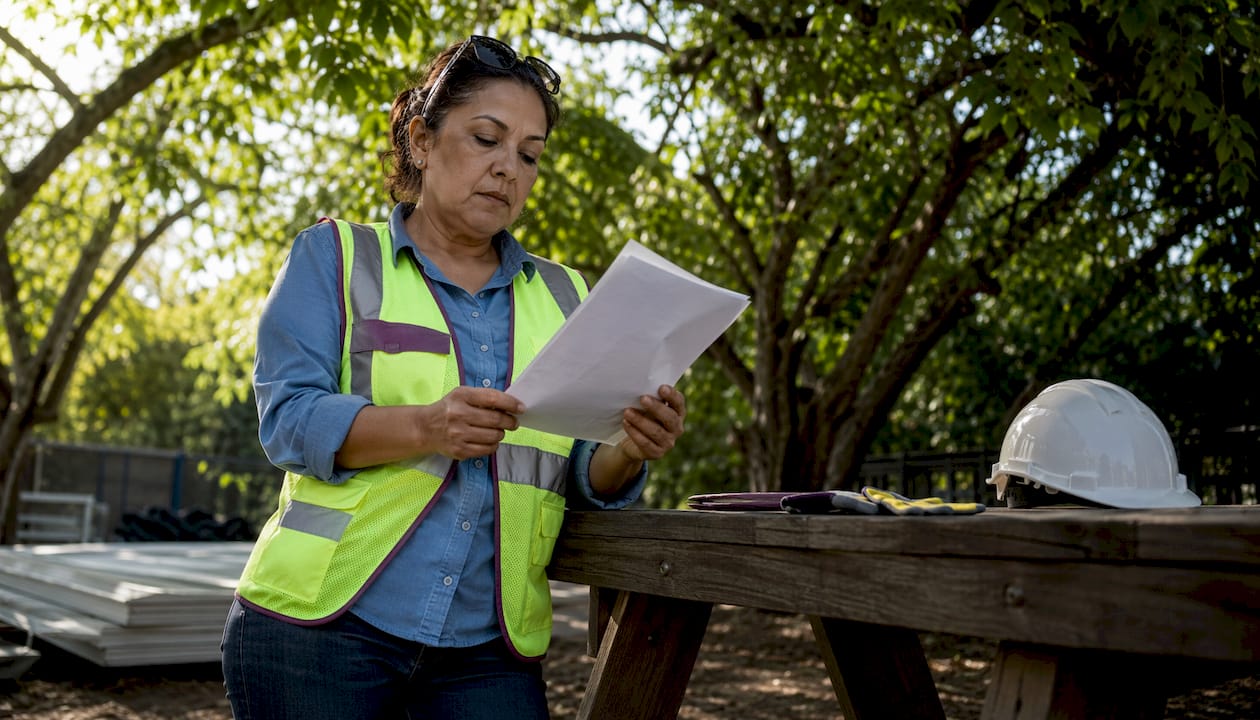
A Pre-Task Plan (PTP) is a formal safety meeting and written document completed before any significant work activity begins. Its purpose is to identify hazards, define control measures, and confirm that every crew member understands the risks before the first tool is picked up.
The core elements of any PTP are:
- Task description: What work is being done, where, and by whom
- Hazard identification: Every foreseeable risk associated with each work step
- Control actions: Specific measures to eliminate or reduce each hazard
- Permits required: Confined space, hot work, or other specialized authorizations
- Training verification: Confirmation that workers hold the required certifications
- Signatures: Plan author, superintendent, safety manager, supervisor, and all crew members
Harvard EH&S requires submission of Pre-Task Plans to the Contractor Safety Officer at least 24 hours before task start. That standard reflects broader industry practice: planning ahead forces teams to think through hazards before pressure and time constraints cloud judgment.
Table of Contents
- Key components every effective pre-task plan must include
- A step-by-step pre-task plan example you can use today
- Common misconceptions and best practices that actually improve outcomes
- How Certicerts helps you manage pre-task plans and training records
- Legal and compliance implications of pre-task plans
- How to customize a pre-task plan for your organization
- Sample completed pre-task plan templates for different industries
- Key Takeaways
Key components every effective pre-task plan must include
A PTP is only as useful as its completeness. Missing one component can leave a crew exposed to a hazard nobody named out loud.
The CPWR checklist identifies these as non-negotiable:
- Project details: Project name, location, date, contractor, and crew foreman
- Sequence of work steps: Numbered activities in the order they will occur
- Hazard identification per step: Specific risks tied to each activity, not generic categories
- Mitigation measures: PPE requirements, rescue procedures, engineering controls
- Permits: Confined space entry, hot work, and any site-specific authorizations
- Special training requirements: Certifications workers must hold before performing the task
- Adjacent occupied space considerations: How nearby crews or the public could be affected
- Housekeeping and materials handling: Storage, disposal, and access routes
- Multi-crew coordination: Communication with ironworkers, drywallers, excavation crews, or any trades working in the same zone
- End-of-shift notes: Space to document safety concerns, equipment issues, or procedure gaps before the next shift begins
- Full crew signatures: Every worker signs before work starts, confirming they understand the plan
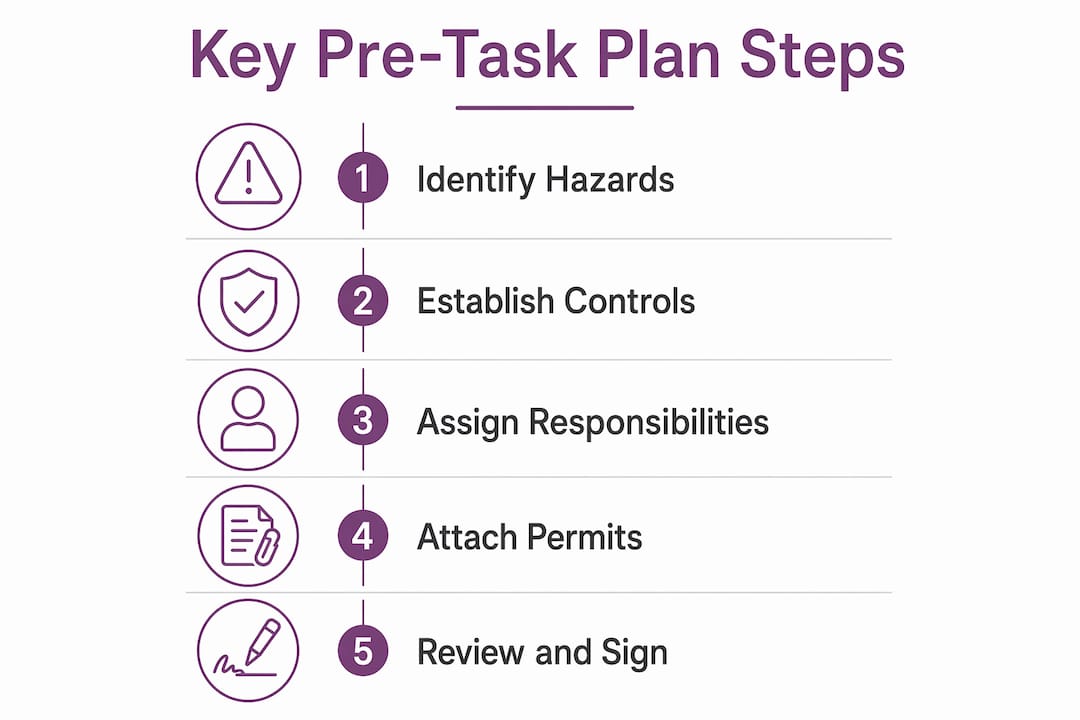
For tasks involving hot work or confined space entry, the permit requirements must be attached directly to the PTP before sign-off.
A step-by-step pre-task plan example you can use today
The CPWR sample completed PTP for conduit installation demonstrates exactly how a well-structured plan reads in practice. The table below mirrors that format.
Project: Project A | Date: July 20, 2023 | Contractor: Contractor B | Foreman: J. Doe | Task: Conduit Installation

| Step | Hazards | Controls | Responsible Person |
|---|---|---|---|
| Pre-job setup | Hand/power tool injuries; slips, trips, falls | Inspect all tools before use; secure work area; apply site-specific PPE; maintain housekeeping | Foreman |
| Bend conduit with conduit bender | Hand pinching; strain from awkward position | Keep hands away from bender head; use proper body positioning; site-specific PPE | Crew lead |
| Cut conduit with reciprocating saw | Lacerations; metal debris in eyes; strain | Secure conduit with vise before cutting; keep hands away from blade; site-specific PPE | Crew lead |
| Drill holes with power drill | Eye debris; lacerations; dust inhalation; noise; burns | Dust mask; hearing protection; sharp drill bits only; no loose clothing; keep hands clear of rotating bit | Assigned crew member |
| Place conduit | Falls; strain; eye debris | Site-specific PPE; ladder positioned directly beneath work area; no overreaching | Assigned crew member |
Adjacent crews and coordination:
| Crew / Activity | Hazards | Action Plan |
|---|---|---|
| Ironworkers / Overhead work | Falling objects | Safety nets; clearly marked safety perimeter |
| Drywallers / Sanding | Silica exposure | Dust mask required |
| Laborers / Excavation | Cave-ins; falling into excavation | Barriers around excavation; spotter required |
Staff responsible for implementing controls: R. Garcia Staff responsible for coordinating with other crews: L. Smith
Each section of this pre-task planning template has a specific job. The steps column forces sequential thinking. The hazards column prevents the team from skipping risks that feel routine. The controls column turns awareness into action. Signatures confirm accountability, not just attendance.
Pro Tip: Before the crew signs, read each control measure aloud. Workers who hear the plan spoken are more likely to apply it than those who only scan a form.
Common misconceptions and best practices that actually improve outcomes
The biggest myth about PTPs is that they are administrative paperwork. They are risk management tools that reduce injuries by forcing hazard visualization before work begins. A crew that has talked through every step of a conduit installation is a different crew than one that just showed up and started drilling.
Common misconceptions to correct:
- “One plan covers the whole project.” Wrong. A separate plan is required for each distinct activity.
- “The foreman fills it out alone.” The most practical hazard identification happens when foremen and crew collaborate during the meeting, not after.
- “Once signed, it’s done.” PTPs are dynamic documents. If site conditions change, work stops and a new plan gets prepared with fresh crew sign-off.
- “The end-of-shift section is optional.” The end-of-shift review is one of the most underused safety tools on any job site. Documenting equipment issues and safety concerns before the next crew arrives prevents the same hazard from injuring a second team.
Pro Tip: Build the end-of-shift review into your daily close-out routine. Five minutes of documentation at 3:30 PM can prevent an incident at 7:00 AM the next day.
For teams managing structured risk assessment workflows, integrating PTP reviews into broader project management processes keeps hazard documentation consistent across shifts and crews.
How Certicerts helps you manage pre-task plans and training records
A PTP is only as strong as the training behind it. If a worker signs off on a confined space entry plan but their certification lapsed three months ago, the plan creates a false sense of compliance. Managing both documents together is where most organizations struggle.
Certicerts is a local-first Windows desktop application built to close that gap. Relevant capabilities for PTP compliance include:
- Certificate generation with digital signatures: Issue training certificates that carry verifiable credentials, directly supporting the “special training required” section of any PTP
- QR code verification: Auditors and supervisors can confirm a worker’s certification status on-site without internet access
- Compliance dashboard: View expiring certifications, training gaps, and department-level compliance status before a PTP is even drafted
- Training matrix: Instantly identify which crew members hold which qualifications, so foremen assign tasks to properly certified workers
- Bulk certificate issuing: After a training event, generate certificates for the entire crew in one pass, keeping records current without manual data entry
- Audit-ready reporting: Export training histories and compliance summaries for safety officer review
The JHA form process and PTP documentation share the same underlying logic: identify the hazard, confirm the control, verify the competency. Certicerts handles the certification side of that equation so safety managers can focus on the field.
Legal and compliance implications of pre-task plans
OSHA does not mandate a specific PTP form, but the General Duty Clause (Section 5(a)(1)) requires employers to provide a workplace free from recognized hazards. A completed, signed PTP is direct evidence that an employer identified hazards and implemented controls before work began. In a post-incident investigation or litigation, that documentation is the difference between demonstrating due diligence and having none.
Many general contractors require subcontractors to submit PTPs as a condition of contract. Failure to produce them can trigger stop-work orders, contract penalties, or disqualification from future bids. For organizations working on federal projects or in regulated industries such as utilities and petrochemicals, site-specific safety plans with documented pre-task review are often contractually mandated.
Retaining completed PTPs as part of the project record is standard practice. Most organizations keep them for the duration of the project plus a defined retention period aligned with their incident reporting obligations.
How to customize a pre-task plan for your organization
A generic PTP template is a starting point, not a finished product. Customization makes the plan actually useful for the specific work your crews perform.
Start with your hazard profile. A manufacturing facility has different baseline risks than a commercial construction site or a utility crew. Build your hazard library from past incidents, near-miss reports, and the specific equipment your workers use daily.
Add your organization’s required permits and certifications directly to the template. If confined space entry is common in your operations, pre-populate that permit section rather than leaving it blank for foremen to remember. The same applies to fall protection plans, lockout/tagout procedures, and any site-specific PPE requirements.
Adjust the signature block to reflect your actual chain of authority. The Harvard EH&S model requires the plan author, area superintendent, project safety manager, supervisor, and crew to all sign. Your organization may have a different approval hierarchy, but every responsible role should appear on the form.
Finally, build in your review cycle. Some organizations require daily PTPs; others use them for each new activity phase. Whatever the cadence, document it in your safety program so foremen know the expectation before they arrive on site.
Sample completed pre-task plan templates for different industries
The structure stays consistent across industries. What changes is the hazard library and the control measures.
Construction (electrical rough-in): Steps cover pre-job setup, conduit bending, cutting, drilling, and placement. Hazards include tool injuries, silica dust, noise, and coordination with overhead trades. Controls center on PPE, tool inspection, and crew communication.
Manufacturing (machine maintenance): Steps cover lockout/tagout, component removal, replacement, and restart verification. Hazards include stored energy, pinch points, and chemical exposure. Controls require documented LOTO procedures and verification by a second qualified worker.
Utilities (confined space entry): Steps cover atmospheric testing, entry permit completion, attendant assignment, and retrieval system setup. Hazards include oxygen deficiency, toxic gas, and engulfment. Controls require a permit, continuous atmospheric monitoring, and a trained attendant outside the space at all times.
Healthcare facilities (maintenance work in occupied areas): Steps cover infection control barrier setup, dust containment, and work execution. Hazards include airborne contaminants affecting patients and HVAC cross-contamination. Controls require ICRA permits and coordination with facility management before any work begins.
The step-by-step guide for team leaders covers how to adapt these frameworks to your specific operational context.
Key Takeaways
A Pre-Task Plan is a legally defensible, operationally critical document that reduces workplace injuries by forcing hazard identification and control verification before work begins.
| Point | Details |
|---|---|
| Submit plans 24 hours early | Many organizations require PTP submission to the safety officer 24 hours before task start. |
| Signatures confirm accountability | The plan author, superintendent, safety manager, supervisor, and all crew members must sign before work begins. |
| Plans must stay dynamic | If site conditions change, work stops and a new plan is prepared with fresh crew sign-off. |
| End-of-shift reviews prevent repeat incidents | Documenting equipment issues and safety concerns before the next shift allows proactive hazard management. |
| Pair PTPs with verified training records | A signed PTP means nothing if the worker’s certification has lapsed; track both together. |